Why Engineering Managers Spend Too Much Time Chasing Updates
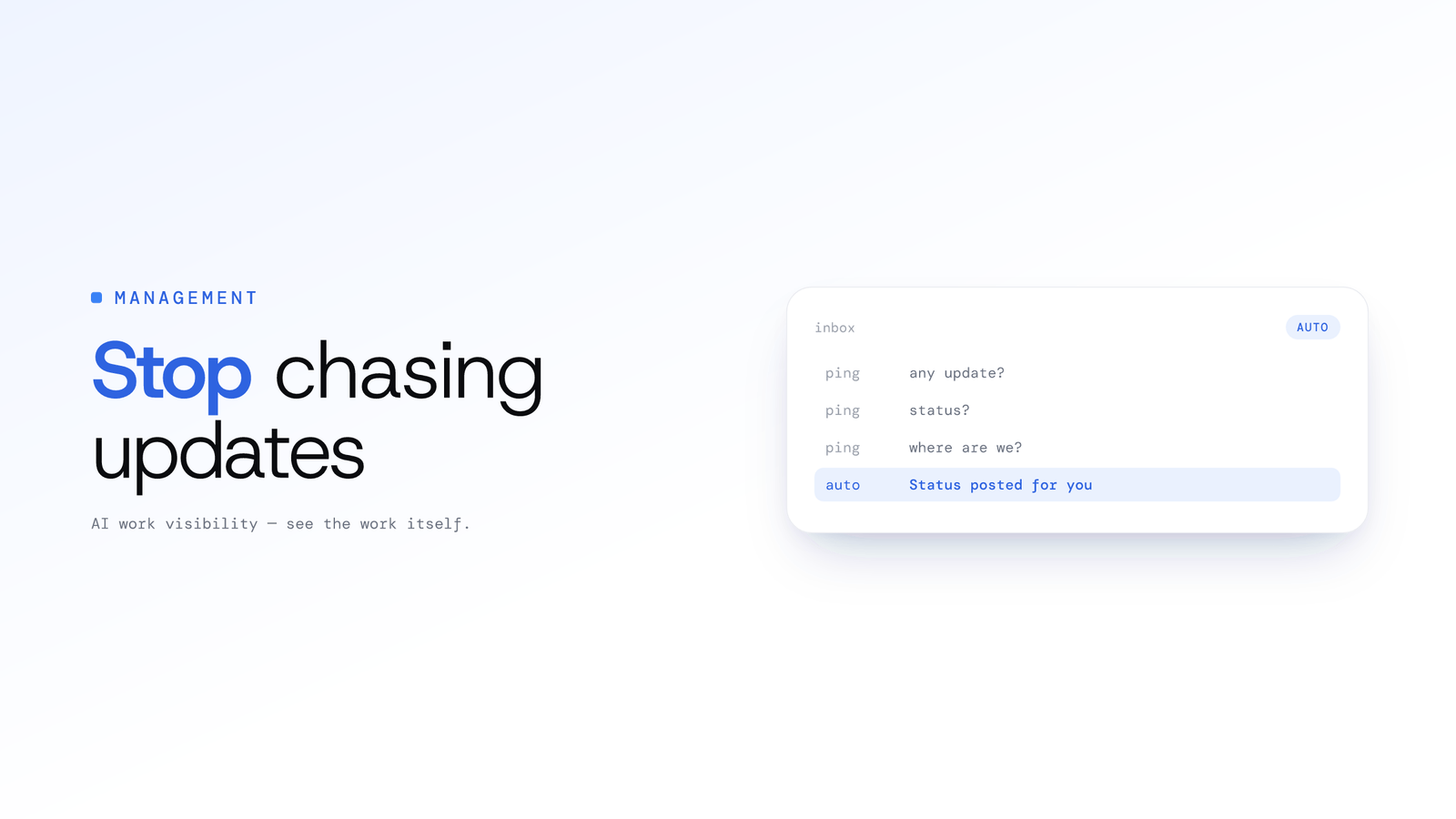
Engineering managers chase status updates because tools hide real progress. Ask the derived work record instead of pinging developers, and the meeting shrinks.
Why Engineering Managers Spend Too Much Time Chasing Updates
Updated on 8 July 2026
Engineering managers chase status updates because their tools track tickets and messages, not the real work, so a board goes stale the moment a task moves and the manager has to reconstruct progress by pinging people. The fix is to read a record derived from the work itself, then ask it instead of interrupting developers.
Every engineering manager knows the feeling: you start your day planning to tackle a strategic project, only to find yourself immediately submerged in a tide of manual status checks. You are not managing engineers; you are managing overhead. A significant chunk of your time, time that should go to mentorship, career development and technical strategy, is instead consumed by a single, relentless task: chasing updates. Managers are fatigued, developers are interrupted, and strategic initiatives languish.
Why do engineering managers end up chasing updates at all?
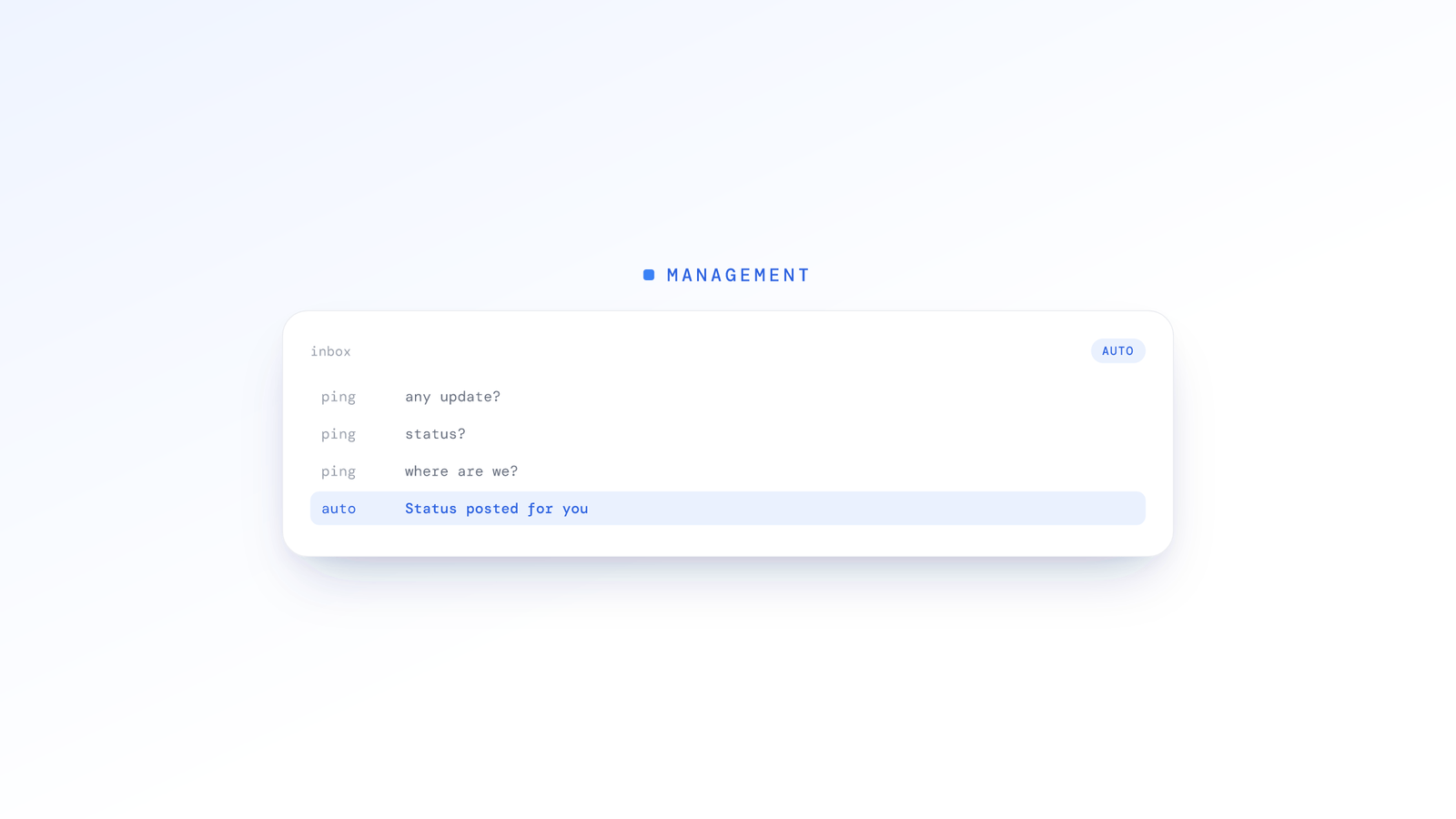
Because the question "what is the status?" is essential, but the usual ways of answering it are the least efficient ones available. A few forces keep the cycle spinning.
- Distributed teams and asynchronicity. As teams spread across locations and time zones, the spontaneous hallway update disappears, and the manager has to bridge the visibility gap by hand.
- The flaw of standups. Manual standups are often a report-out rather than a problem-solving session. They are time-boxed, prone to bias, and still leave the manager to synthesise everything afterwards.
- Lack of real-time visibility. Project management tools fall out of sync with actual development the moment a task is moved. So managers ping developers, scan Slack, or open repositories to find the single source of truth.
None of these is solved by asking for more updates. They are solved by making the update effortless and grounding it in the real work, so that "what is the status?" becomes a question you ask a record rather than a person.
How do you stop chasing updates from developers?
Stop asking people and start asking the record. Instead of interrupting a developer to reconstruct their progress, a good system reads what actually happened and lets you query it directly.
ScreenJournal is an AI work visibility tool that reads on-screen work as it happens, turns it into a detailed timeline of what each person actually did, and then, by default, deletes the raw screen data. Timelines accumulate into a searchable chronicle of everyone's work history, and from them ScreenJournal generates timesheets and reports automatically and drafts standup summaries on request, answering questions about any of it in plain English.
In practice, by default the screen is recorded as short-lived video, the work is read from it, and the video is deleted during processing; a manager can opt in to keep video evidence, stored for up to 3 months. What remains otherwise is a plain-English timeline of what each person actually did, not screenshots or footage. So when you need to know where a feature stands, you do not open a thread and wait: you ask Ask AI, and it answers from the derived record. Because those timelines roll up into a work chronicle, "what happened with the migration this week" is a query answered in seconds and scoped to your permissions, not a round of messages that pulls three engineers out of flow.
For engineering specifically, Tempo, ScreenJournal's Claude Code and AI-assisted-coding analytics, is designed to read the local repository and Claude Code's session files so that progress can be summarised from where the work happens rather than from a meeting. Tempo is launching soon.
Can automated standups replace the update-chasing ritual?
Yes, but be precise about what "automated" means here. As an industry idea, automated standups turn an objective record of work into a written update so nobody has to recite one from memory. That is the shift worth making.
With ScreenJournal the standup is drafted on request, never pushed on a schedule. A manager can draft a standup summary from the work timeline, either through the Ask AI chat or over MCP so the team can use its own model, rather than waiting for everyone to type one up. Tempo (launching soon) will extend this to the engineering layer, analysing commit and pull-request activity alongside project data to draft a daily or weekly summary for the team.
The daily standup then becomes a summary the team reviews, which frees the meeting to discuss blockers and solutions instead of reading a to-do list aloud. The general cost of the ritual, minutes per person per day spent reciting and re-synthesising, is illustrative of how much the status round quietly consumes; moving it off the calendar is where the time comes back.
How does better visibility surface blockers without more meetings?
By reading the actual record of work, so signs of stagnation surface on their own instead of after a manual sweep. Manual follow-ups are a heavy time sink: a manager often scans dozens of threads or tickets to find who is stuck.
Tempo is designed to flag patterns like a long-open pull request with no reviews, or a drop in activity on a key issue, so the right person can act before the manager has to go digging. Tempo is launching soon. Alongside it, ScreenJournal's work timelines already show what people did across their tools, which helps managers spot a struggling teammate or an overloaded key developer without pulling a single spreadsheet. The visibility is objective rather than anecdotal, and it arrives without adding a meeting to the calendar.
What does an engineering manager get back?
Time, focus and a calmer team. Instead of policing status, you work from a comprehensive view of what happened and spend your attention on the parts of the job that needed a human: unblocking people, coaching, and setting technical direction. Developers stop being interrupted for updates they never wrote, and the manager stops being the human synchronisation layer between tools that never quite agree.
Frequently asked questions
Why do engineering managers spend so much time chasing status updates?
Because their tools show tickets and messages, not the actual work. A board goes stale the moment a task moves, so managers ping developers to reconstruct progress by hand. Reading a record derived from the real work removes that manual reconstruction and the interruptions that come with it.
How can I stop chasing updates from developers?
Stop asking people and start asking the record. When a tool writes a timeline of what each person actually did, you query that instead of pinging developers. The answer is grounded in the work, arrives in seconds, and nobody loses focus to a status ping.
Are automated standups for engineering managers actually automatic?
Not with ScreenJournal. Standups are drafted on request, through the Assistant chat (Ask AI) or the ScreenJournal MCP, so you pull an update when you want one rather than pushing a scheduled prompt at the team. The draft comes from the timeline, so it reflects real work rather than recollection.
Can I get engineering team work visibility without more meetings?
Yes. Timelines of what each person did accumulate into a searchable chronicle, so progress questions become queries rather than agenda items. The status round that opens most standups moves off the calendar, and the meeting is left for blockers and decisions that genuinely need people.
Stop chasing updates and start reading them. See how it works at https://screenjournal.ai.
Stop guessing. Start knowing.
Let AI turn screen data into clear insights. Start your 2 months free trial
Related Posts
How Startups Can Save 2+ Hours a Week Per Engineer With Smarter Standups
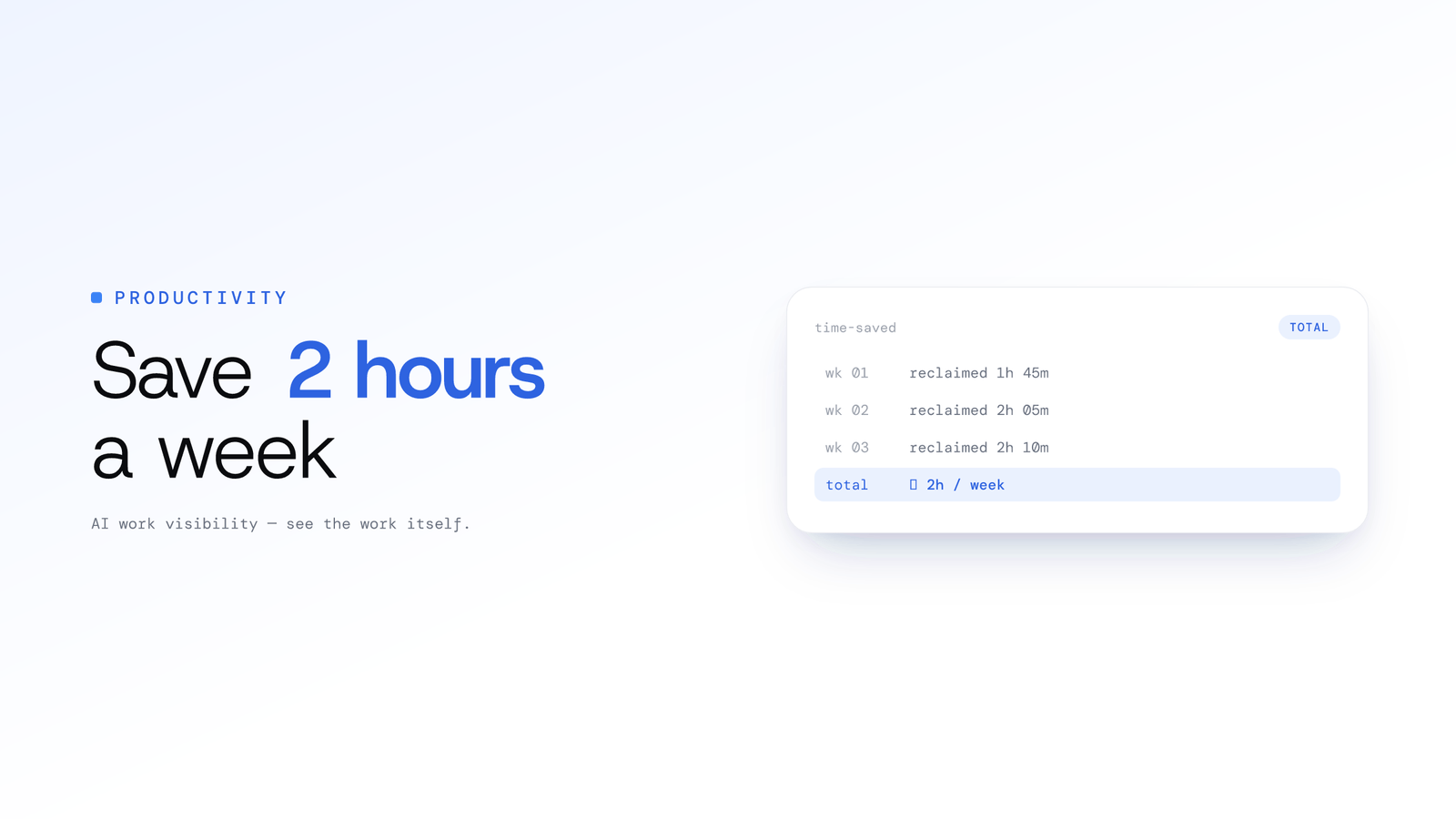
The traditional 15-minute standup costs far more than 15 minutes. Here is how a smarter, async, data-driven model can hand focused time back to your engineers.
Turning Git Data into Actionable Team Insights
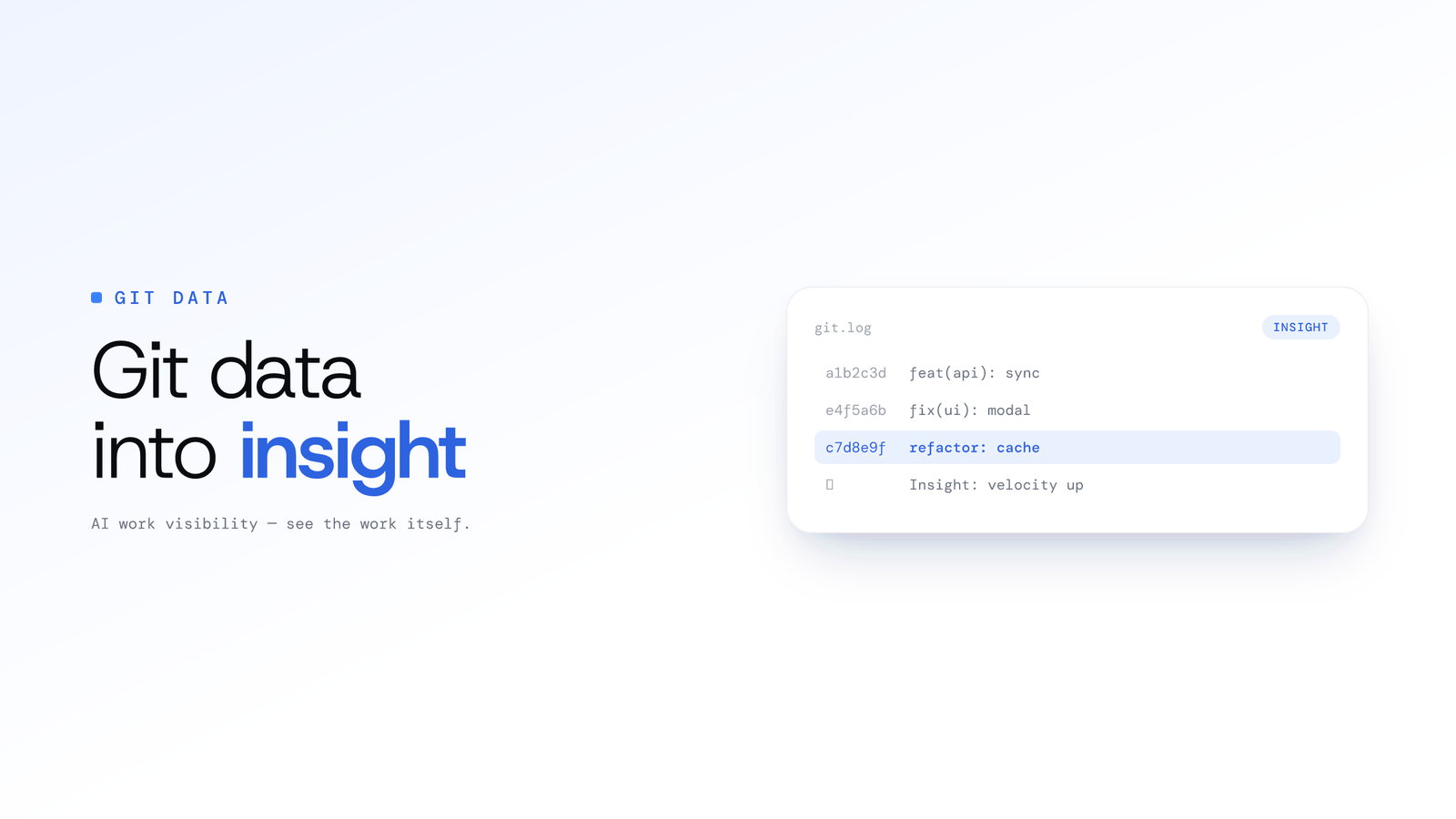
Engineering teams sit on a goldmine of objective activity data in Git. Here is how Tempo, ScreenJournal's engineering analytics (launching soon), is designed to turn commits, pull requests and issues into proactive, actionable insights.
Automated Standups for Engineering Teams: How They Work
Automated standups draw the daily update from real work like git activity and on-screen output, so engineers stay aligned without the context-switch of writing it by hand.