How Startups Can Save 2+ Hours a Week Per Engineer With Smarter Standups
The traditional 15-minute standup costs far more than 15 minutes. Here is how a smarter, async, data-driven model can hand focused time back to your engineers.
How Startups Can Save 2+ Hours a Week Per Engineer With Smarter Standups
Updated on 8 July 2026
You automate the engineering standup by turning the daily status report into a machine-generated summary drawn from the work itself, delivered asynchronously, so the synchronous meeting shrinks to blockers and decisions. Done well, this can hand a meaningful chunk of focused time back to every engineer each week by removing both the recitation and the context switch around it.
For a startup engineering team, time is the ultimate currency. Yet countless teams start their day by burning 15 valuable minutes on the same ritual: the daily standup.
While well intentioned, the traditional standup has morphed from a quick sync into a productivity sink. It is often a sequence of vague status reports ("I worked on the thing...") that everyone has to sit through, whether or not the update is relevant to them.
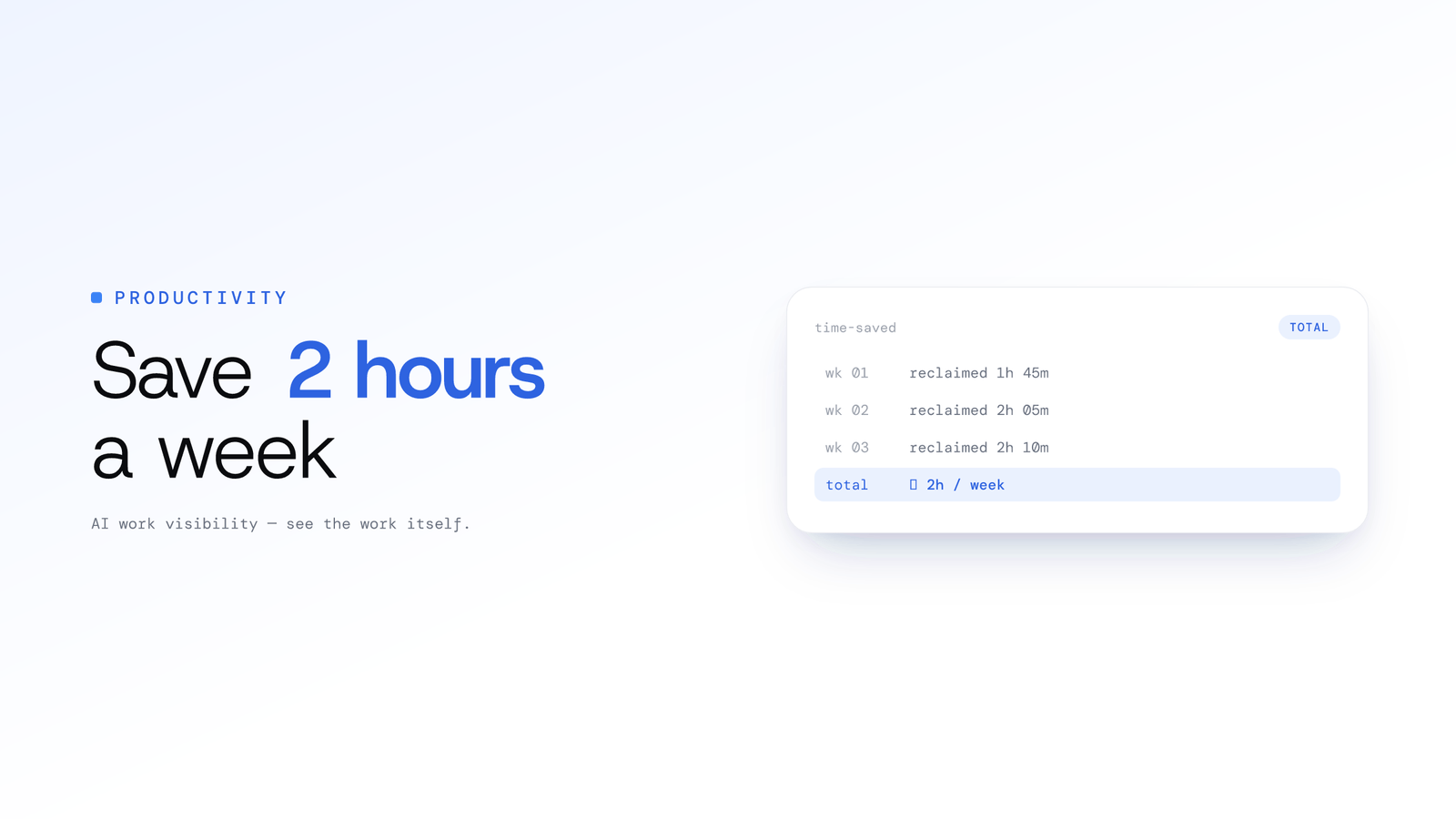
The good news is that by adopting a smarter, data-driven standup model, startups can hand back focused, productive time to every engineer, every week. To put a rough number on it, the example below sketches how that can add up to two hours or more per person. Treat it as an illustration of the ritual's general cost, not a guaranteed or measured result.
What is the real cost of a daily standup meeting?
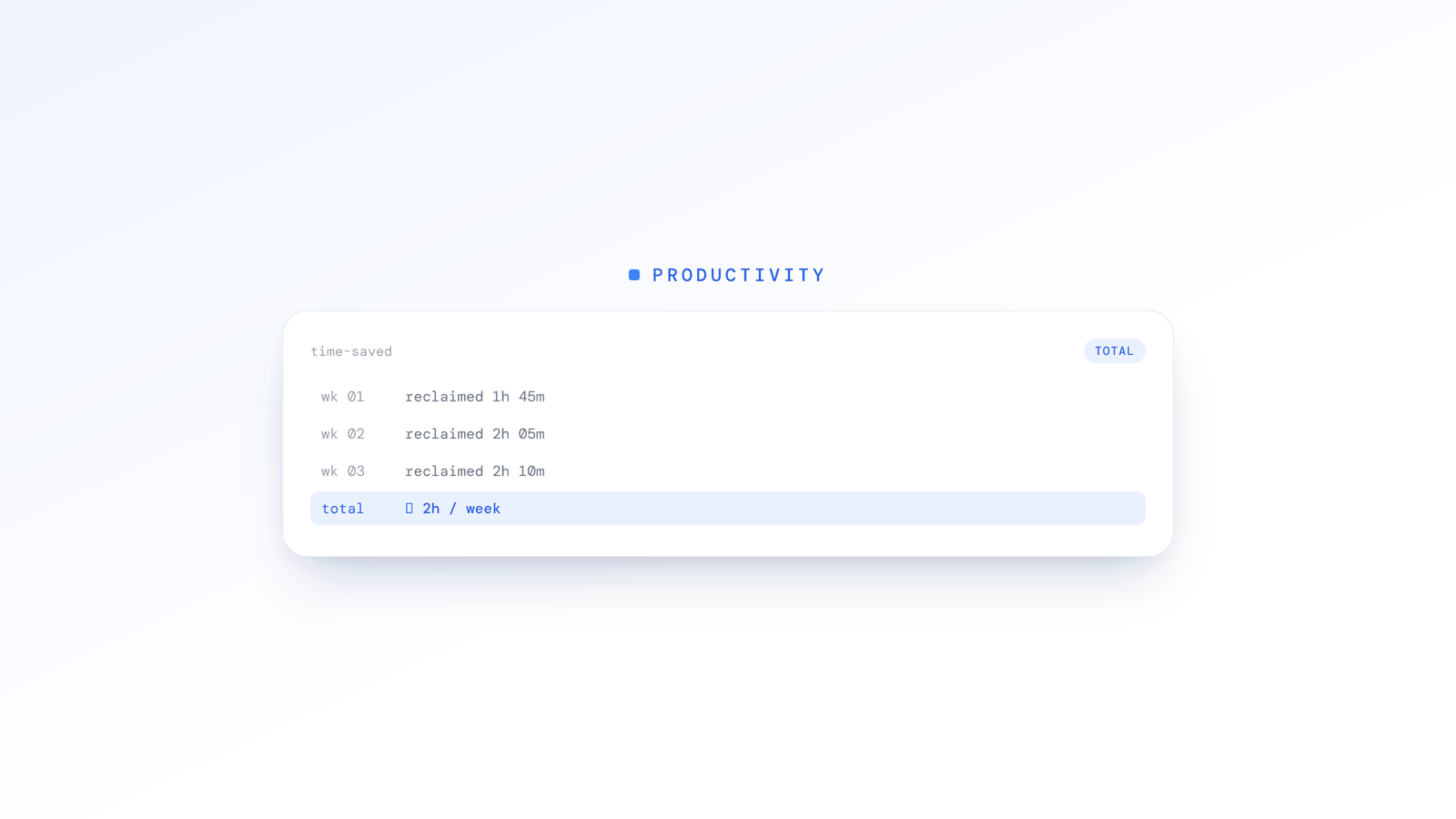
The real cost of a daily standup is more than the fifteen minutes on the clock. As an illustration, let's look at the arithmetic for a small 8-person team. Treat these figures as a back-of-envelope estimate of the ritual's general cost, not a measured outcome.
- Meeting time: 15 minutes/day x 5 days/week = 75 minutes per engineer, per week.
- Context switching: the part that hides in plain sight. An engineer rarely jumps straight from their code into a meeting and back again in thirty seconds. Studies of context switching suggest the transition to and from a synchronous meeting can cost several minutes of ramp-up each way, plausibly 5 to 10 minutes before and after. That is easily another 10 minutes/day, or roughly 50 minutes/week.
Add those together and, as a rough estimate, you are already near 125 minutes (over two hours) of time per engineer, per week, orbiting a 15-minute meeting. The exact figure will vary by team; the point is that the ritual costs well beyond its scheduled length.
The solution is not killing the standup. It is automating the status update so human time is reserved for human problems.
How do you automate an engineering standup?
You automate it by shifting the daily status report from a verbal recitation to an asynchronous, machine-generated summary based on actual work. The engineer's day is already recorded, so instead of asking "what did you do yesterday?", you let the record answer and reserve the meeting for the parts that need people.
ScreenJournal is an AI work visibility tool that reads on-screen work as it happens, turns it into a detailed timeline of what each person actually did, and then, by default, deletes the raw screen data. Timelines accumulate into a searchable chronicle of everyone's work history, and from them ScreenJournal generates timesheets and reports automatically and drafts standup summaries on request, answering questions about any of it in plain English.
1. Data, not dialogue: draft the status from real work
Draft the status from the work itself rather than from memory. The vast majority of an engineer's day lands in the tools they already use, and in the work timeline ScreenJournal builds from on-screen work. So the update can describe what actually happened rather than a rushed recollection of it: what moved, what shipped, what is still open.
For engineering teams specifically, deeper coding analytics are on the way. This is the angle behind Tempo, ScreenJournal's Claude Code analytics for engineering teams, which is launching soon. Tempo is designed to read the local repository and Claude Code's session files to analyse AI-assisted coding sessions in depth, so the parts of the day that never show up as a commit are still visible. Treat this as a capability launching soon rather than something available today.
The result is a concise, objective and timely report that reflects the work that genuinely happened.
2. Prioritise asynchronous delivery
The biggest time-saver is removing the synchronous requirement. When the standup summary is shared asynchronously:
- Engineers gain control: they read the updates when it fits their flow, not when the clock dictates. No more interrupting deep work for a scheduled meeting.
- Focus is clearer: team members only spend time on the updates relevant to their immediate tasks or dependencies, skipping the noise.
With ScreenJournal, standup summaries are drafted on request rather than pushed on a schedule. You pull one whenever you need it through the Assistant chat (Ask AI) or over the ScreenJournal MCP, so your team can use its own choice of AI model and the update is ready when the team is, not the other way round.
3. Reserve sync time for decisions and blockers
With the status handled asynchronously, your daily synchronous meeting, if you still want one, can shrink from 15 minutes to 5, or drop on the quieter days. That ultra-short sync is used only for:
- Resolving identified blockers that need cross-team input.
- Making critical decisions that cannot wait for asynchronous discussion.
- Quickly aligning on an immediate pivot or priority change.
This high-leverage meeting style means that when engineers do meet, the conversation is focused, actionable and contributes directly to delivery.
How do automated standups save engineering time?
Automated standups save time by removing the synchronous status round and the context switch that wraps around it. Working from the illustrative arithmetic above, the two sources of overhead come back to the team:
- The meeting time (roughly 75 minutes a week in the example) is reclaimed for focused coding.
- The context-switching overhead (roughly 50 minutes a week in the example) is largely removed by eliminating the synchronous interruption.
For a resource-constrained startup, handing a couple of hours of focused work back to each engineer every week, as a rough estimate, is a real gain, and it directly supports the ability to track, plan and deliver faster. Again, that figure is illustrative of the ritual's general cost, not a guaranteed or ScreenJournal-measured outcome. The principle holds even where your numbers differ: let the tools report status so your engineers can get back to building.
Frequently asked questions
How do you automate engineering standups?
You shift the status report from a verbal round to a machine-generated summary drawn from the work itself. The engineer's day is already recorded in the work timeline, so an assistant can draft yesterday's update from that record. People review the draft and post it, keeping meeting time for real problems.
What is the real cost of a daily standup meeting?
More than the fifteen minutes on the clock. As a rough illustration, a synchronous standup also costs the ramp-up before and after: studies of context switching suggest returning to deep work can take several minutes each way. Across a week that overhead can add up to a meaningful chunk of focused engineering time per person.
How do automated standups save engineering time?
By removing the synchronous status round and the context switch around it. When the update is drafted from real work and read asynchronously, engineers stop interrupting deep work for a scheduled recitation and stop sitting through updates that never applied to them. The remaining sync time is reserved for blockers and decisions that genuinely need a conversation.
Does an async standup work for a distributed startup?
Yes, and distributed teams benefit most. When the update is drafted from a timeline rather than a live call, it is ready the moment each person's day starts, with no waiting on someone else's morning. Handovers stop depending on what people remembered to type at midnight, and follow-up questions can be asked of the record directly.
Let the work report itself
Smarter standups are not about tracking people harder. They are about letting the work speak, so engineers spend less of their week reciting status and more of it building. ScreenJournal drafts the update from a timeline of what actually happened, on request, and keeps the meeting for the problems that need a conversation.
See how it works at https://screenjournal.ai
Stop guessing. Start knowing.
Let AI turn screen data into clear insights. Start your 2 months free trial
Related Posts
Why Engineering Managers Spend Too Much Time Chasing Updates
Engineering managers chase status updates because tools hide real progress. Ask the derived work record instead of pinging developers, and the meeting shrinks.
How to Cut Daily Standup Time in Half Without Losing Context
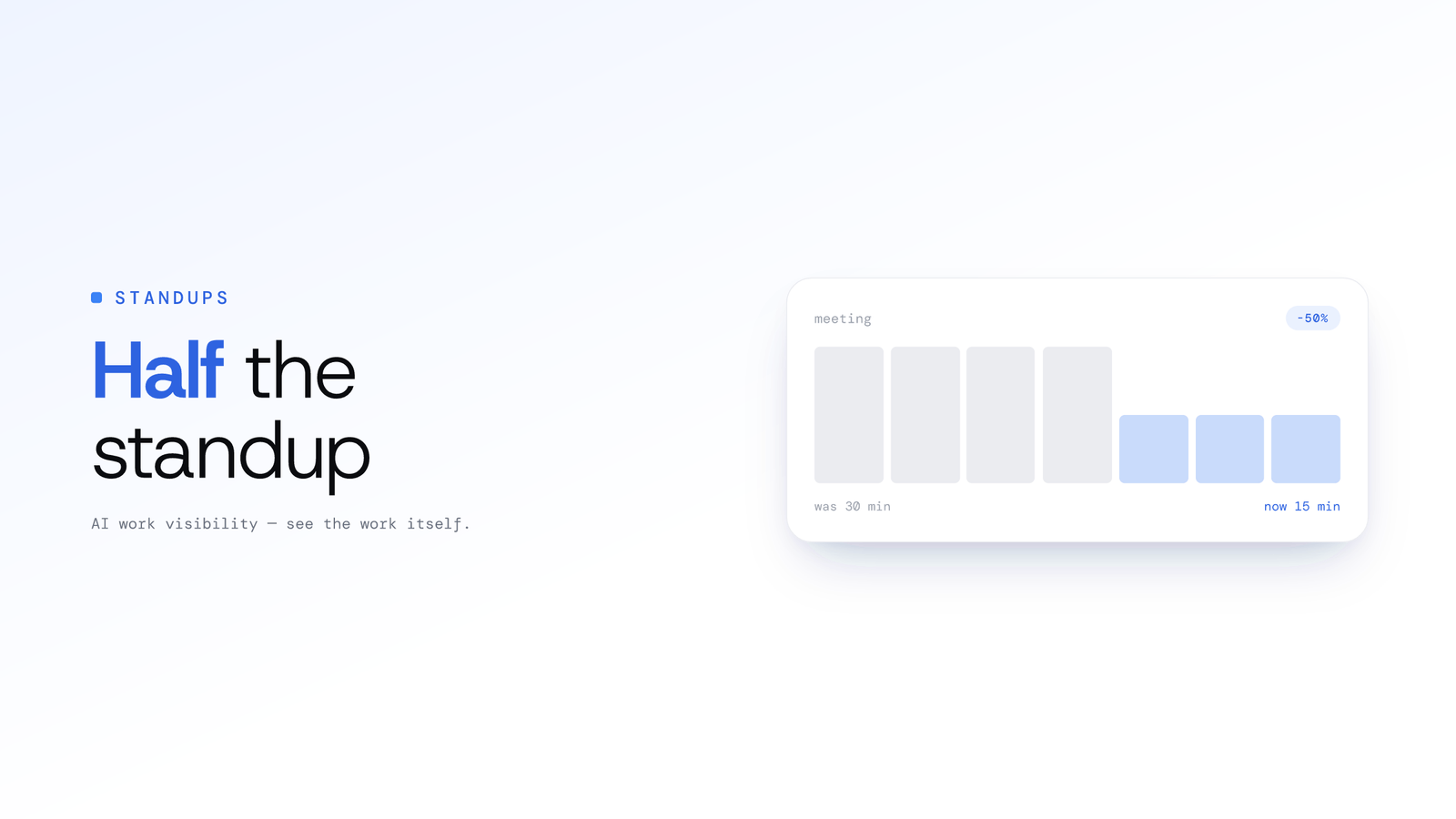
Cut daily standup time in half with three approaches: asynchronous updates, automated summaries from real work, and a hybrid model that keeps context intact.
Automated Standups for Engineering Teams: How They Work
Automated standups draw the daily update from real work like git activity and on-screen output, so engineers stay aligned without the context-switch of writing it by hand.